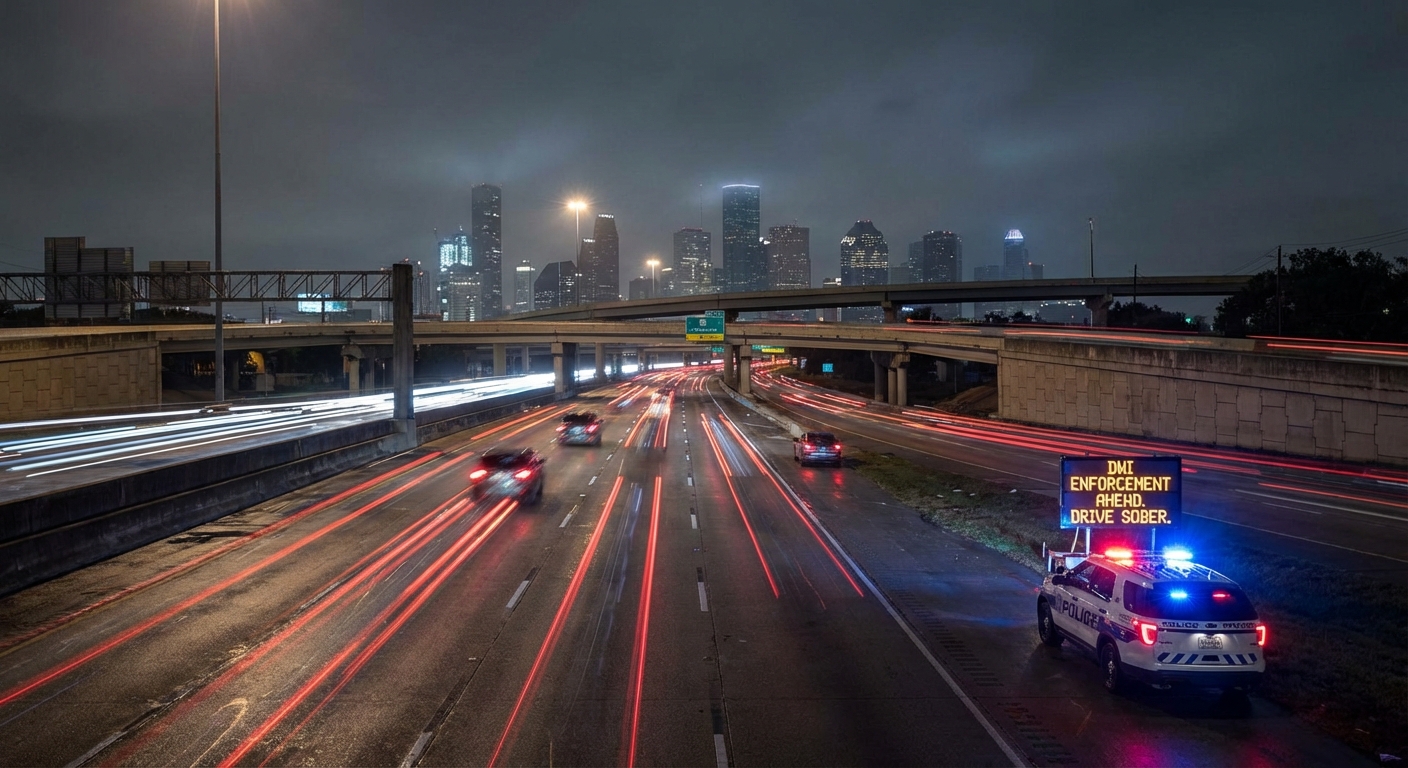
Effectiveness Debate: Do DUI Checkpoints Work to Reduce Drunk Driving?
Do DUI checkpoints work to reduce drunk driving? Studies from across the United States show that sobriety checkpoints can reduce alcohol-related crashes in states that use them, but Texas takes a different path and relies on DWI patrols and other strategies instead of routine checkpoints. If you drive in Houston or anywhere in Texas, it is important to understand how checkpoints work in general, why Texas does not use them the same way, and what that means for your real risk of a DWI stop on your daily commute or weekend night out.
This guide looks at the effectiveness of sobriety checkpoints, compares DWI checkpoints vs patrols, and explains how Texas DWI saturation patrols and other enforcement tools affect your chances of getting stopped.
Big Picture: Do DUI Checkpoints Work, And Does It Matter In Texas?
Across the country, research suggests that well advertised and properly run sobriety checkpoints can reduce alcohol-related crashes, sometimes by noticeable percentages, because they create a visible, predictable deterrent. That is the heart of the debate around the effectiveness of sobriety checkpoints. They are most common in states that allow them under their state constitutions and that fund large-scale holiday or weekend operations.
Texas courts and lawmakers take a different position. Routine roadside sobriety checkpoints are not used here the way they are in some other states, so for a Houston driver like you, the bigger danger usually comes from targeted DWI traffic stops and saturation patrols along major corridors, not from a single checkpoint line on your way to work.
Still, if you are a construction manager or other worker who drives job to job every day, it helps to know how checkpoints would normally work, why Texas focuses on patrols instead, and how both approaches can affect your license, job, and record.
Quick Scenario: A Houston Commuter Worried About Checkpoints
Picture this: You finish a long day at a job site on the North Loop, grab dinner with a coworker, and have two beers with your meal. On the drive back toward your home in northwest Houston, you see social media posts about a "DWI checkpoint" somewhere near Highway 290. You start to wonder if that means you are more likely to get stopped and tested on the way home, and what that might do to your commercial and personal driving record.
The reality in Texas is that you are more likely to be stopped because of speeding, weaving, a broken tail light, or a late lane change than because of a roadside checkpoint. But, once an officer pulls you over for any reason and suspects alcohol, the stop can quickly turn into a full DWI investigation with field tests and breath or blood testing. Understanding that pattern, rather than worrying only about checkpoints, is key if your job depends on your license.
How Sobriety Checkpoints Work In General
Even though Texas does not rely on them, it helps to understand how DUI checkpoints usually function in other states. That gives context when you hear about them in the news and helps you compare them to the patrol-heavy approach used in Houston and across Texas.
Basic Setup Of A Checkpoint
- Police pick a location, often along a busy road with a history of alcohol-related crashes.
- Officers set up marked vehicles, cones, and signs so drivers have clear warning.
- They follow a neutral pattern, such as stopping every third or fifth vehicle, to avoid profiling.
- Each driver has a brief contact, usually less than a minute, while the officer looks for signs of impairment.
If the officer sees or smells signs of impairment, that driver may be directed to a separate area for further questioning, field sobriety tests, and possibly a preliminary breath test. Other drivers are waved through.
Goals Of DUI Checkpoints
- Deterrence: Letting people know in advance that checkpoints will be out can discourage them from driving after drinking.
- Detection: Catching impaired drivers who might not otherwise be stopped for speeding or visible traffic violations.
- Public awareness: Reminding the public that DWI enforcement is active during holidays, big events, and weekends.
For you as a Houston commuter, it is useful to see that checkpoints are only one method among many to achieve these goals. Texas tends to use the same deterrence and detection goals but through patrols, no refusal weekends, and targeted enforcement operations.
The Effectiveness Of Sobriety Checkpoints: What The Data Says
Researchers and safety agencies have studied checkpoint programs for decades to answer the core question: do DUI checkpoints work to reduce drunk driving and alcohol-related crashes. Many national and state-level reviews have found that checkpoints, when used regularly and paired with public warnings, can lead to measurable drops in alcohol-related crash numbers over time.
For example, Texas transportation and safety researchers regularly look at crash, arrest, and enforcement data across the state to assess which strategies work best. Reports like the Texas Impaired Driving Assessment (data and enforcement findings) discuss how different tools, such as saturation patrols and no refusal operations, play a role in reducing impaired driving.
Even in states that allow checkpoints, though, they usually do not act alone. They are one part of a larger plan that includes license suspension laws, public education, treatment courts, and technology like ignition interlock devices.
Checkpoints vs Real-World Behavior
A common misconception is that checkpoints "catch everyone" driving drunk and that avoiding checkpoints means there is little risk of getting stopped. In reality, even in heavy checkpoint states, most DWI arrests still come from traditional patrol stops based on driving behavior, not from checkpoint lines.
If you are a Houston driver who sometimes has a drink with dinner after work, your biggest risk usually comes from that one missed turn signal or drifting across a lane that draws an officer's attention, not from a checkpoint that you see coming from a mile away.
Texas Law: Why Routine DUI Checkpoints Are Not The Main Tool
Texas does not run routine, random sobriety checkpoints across the state the way some other states do. That is because of how Texas courts interpret the state constitution and limits on suspicionless stops.
Texas courts have held that random checkpoints, without specific legislative authorization and clear guidelines, are not permitted. As a result, Texas agencies focus instead on traditional traffic enforcement and targeted DWI operations. If you want a deeper dive into the legal side, you can read more about how Texas law limits sobriety checkpoints and how that compares to nearby states.
For you, that means you are unlikely to meet a classic roadside checkpoint on your way to a Houston job site. But you are very likely to see extra patrols on weekends, near stadiums, and around bar districts. Those patrols function in a similar way from a deterrence standpoint, but they feel very different on the road.
DWI Checkpoints vs Patrols: What Texas Actually Uses
In Texas, including Houston and Harris County, law enforcement relies on a combination of traditional traffic stops and special DWI saturation patrols instead of regular checkpoints. When people ask about DWI checkpoints vs patrols, they are usually trying to understand where the real risk lies.
What Are Texas DWI Saturation Patrols?
Saturation patrols involve putting more officers than usual into a focused area at specific times, such as:
- Weekend nights along major corridors like I-45, Highway 59, or the 610 Loop
- Holiday periods around New Year's, the Fourth of July, or big sports events
- Areas with high counts of bars, restaurants, or prior DWI crashes
Officers then look for any reason under the traffic code to initiate a stop. That might be speeding, running a light, not using a turn signal, or even a simple equipment issue.
If you are driving home tired from a long shift and roll a stop sign or drift over a lane divider, you may be stopped in one of these saturation areas. Once the officer approaches your window and smells alcohol or sees signs of impairment, the stop can quickly shift into a DWI investigation.
How Patrols Compare To Checkpoints In Practice
- Visibility: Checkpoints are obvious, with cones and signs. Saturation patrols are less visible because they look like normal policing, but there are simply more officers around.
- Reason for stop: At a checkpoint, the stop is about the checkpoint plan itself. With patrols, officers need a traffic reason to pull you over.
- Efficiency: Studies suggest checkpoints can process many drivers quickly. Patrols may make fewer stops per officer, but they often focus on riskier driving behaviors.
- Risk to you: In Texas, patrols are the biggest practical risk because they are used heavily and can occur almost anywhere, any night, especially in high traffic corridors.
If you are a "Problem-Aware Commuter" who already understands you are at some risk and wants to avoid a DWI, understanding saturation patrols can be more helpful than focusing only on checkpoints you may never actually see.
Houston Texas Drunk Driving Enforcement Data And Trends
Houston and Harris County consistently rank among the highest in Texas for DWI arrests and alcohol-related crashes. That is due in part to the high population, sprawling freeway system, and heavy bar and restaurant scene. Local agencies partner with state and federal programs to fund more patrols, no refusal weekends, and special operations targeting impaired driving.
Reports like the state-level impaired driving assessments look at crash patterns, arrest numbers, and where enforcement money goes. They show that Texas leans into overtime patrols and evidence-based strategies instead of standard roadside checkpoints. For you, that means:
- You may not see many checkpoints, but the chance of a traffic stop that turns into a DWI investigation is significant, especially at night.
- Enforcement often clusters around certain corridors and times, such as weekend nights, holidays, and large events.
- Even one DWI arrest can trigger both a criminal case and a separate license suspension process, with timelines that move quickly.
If you often drive early or late to job sites, or you are responsible for a company vehicle, these patterns matter more than the rare headline about an out-of-state checkpoint.
For The Solution-Seeking Analyst: Looking Deeper At Effectiveness
Solution-Seeking Analyst: If you like data and comparisons, the debate over the effectiveness of sobriety checkpoints versus patrols likely interests you. Many studies compare checkpoint-heavy states with those that rely mostly on patrols. A common finding is that visible, consistent enforcement of any kind, combined with strong license suspension laws and public campaigns, tends to reduce alcohol-related crashes more than any one specific tactic by itself.
In Texas, law enforcement often emphasizes high-visibility patrols and publicity for no refusal initiatives. This can achieve some of the same deterrent effect as a checkpoint, because drivers know they are likely to be stopped if they show any signs of impairment. When you look at the numbers, the key takeaway is that your risk of getting stopped rises most when enforcement is visible and heavily promoted, regardless of whether the tool is a checkpoint or a patrol.
For The Young Unaware Driver: A Simple Wake-Up Call About Costs
Young Unaware Driver: If you are in your early twenties and think checkpoints are rare and easy to avoid, the bigger issue is what even one DWI can do to your future. In Texas, a first-time DWI can lead to:
- Thousands of dollars in fines, court costs, and mandatory fees
- A license suspension that can last months
- Higher insurance rates for years
- A criminal record that can affect job and housing opportunities
It is easy to believe that you will always see a checkpoint in time to turn around or that you can "handle" driving after a few drinks. But most people in Houston who get arrested for DWI were not caught at a checkpoint. They were stopped for normal driving mistakes that anyone can make, such as speeding or failing to signal. Your smartest move is avoiding impaired driving altogether, using rideshares, designated drivers, or planning ahead before you drink.
For The Career-Focused Executive: Discretion And Exposure
Career-Focused Executive: If you hold a sensitive position and worry most about discretion and long-term exposure, you may fear that checkpoints create a public spectacle. In Texas, where checkpoints are not the primary tool, most DWI investigations begin with a traffic stop that looks like any other. There may be dash camera or body camera footage, but there is rarely a line of onlookers at a checkpoint.
Your real exposure comes from the combination of the arrest record, any formal charge filed in court, and collateral consequences within your profession, such as professional licensing boards or company policies. Knowing when enforcement is likely to be heaviest, and understanding your rights during a DWI stop, can help limit additional risk. The goal is not to "beat" the system, but to avoid impaired driving and protect your record if a stop does occur.
For The Most-Aware VIP: Strategy, Record Protection, And Checkpoint Myths
Most-Aware VIP: If you already know about DWI law and are focused on strategy and record protection, you may wonder if checkpoints create different legal issues than patrol stops. In many states, checkpoint cases raise questions about whether the operation met strict constitutional standards, had proper planning, and applied neutral stopping patterns. In Texas, because true random checkpoints are not common, most DWI defenses focus instead on the officer's basis for the stop, the field sobriety testing, and breath or blood test procedures.
From a practical standpoint, whether the stop came from a checkpoint or a patrol is less important than how the officer handled the investigation and whether your rights were respected. Strategy often involves reviewing video, challenging the reason for the stop, and examining the scientific reliability of any tests used.
What Really Raises Your Risk In Texas: Not Just Checkpoints
Since Texas leans on patrols and targeted operations, your risk of getting arrested for DWI in Houston rises when you combine alcohol with late-night driving in high enforcement areas. That is true even if you never pass through what looks like a traditional checkpoint.
Key Risk Factors For A Texas DWI Stop
- Driving late at night or very early morning, especially on weekends
- Leaving bar districts or sports venues around closing or game end time
- Speeding, weaving, or rolling through stop signs
- Driving with broken lights or expired registration
If you drive a company truck or supervise crews across Houston, you are often on the road during times when enforcement is heavy. Even minor mistakes like drifting in your lane or forgetting to signal a lane change can draw attention if an officer already suspects drivers might be impaired in that area.
What Happens During A DWI Stop In Texas (Checkpoint Or Not)
Whether you are stopped in a state that uses checkpoints or during a Texas patrol, the investigation process has common steps. Knowing these can lower your anxiety if you are pulled over after having something to drink.
Initial Contact
The officer approaches your window, asks for your license and insurance, and observes your speech, movements, and smell. They may ask where you are coming from and whether you have had anything to drink.
Field Sobriety Testing
If the officer suspects impairment, they may ask you to step out of the vehicle and perform standardized field sobriety tests. These can include eye movement tests, walking a straight line, and standing on one leg. Performance on these tests can lead to a decision to arrest.
Breath Or Blood Testing
After an arrest, Texas implied consent laws apply. The officer may request a breath or blood sample to measure your blood alcohol concentration. Refusal or failure can affect both your criminal case and your driver's license.
If you want a deeper breakdown of each step, including what to say and what to expect, you can review a guide on what to do if an officer stops you for DWI so you are not trying to figure it out in the moment on the side of the road.
License Suspension Risk: ALR And The 15-Day Deadline
One of the most important points for any Houston driver is that a DWI arrest can trigger a civil license suspension process known as Administrative License Revocation (ALR). This process is separate from any criminal charge and has strict deadlines.
After a DWI arrest in Texas, you usually have only 15 days from the date of notice to request an ALR hearing to challenge the automatic suspension of your driver's license. If you miss that window, your license suspension may go into effect automatically, even if the criminal case has not been resolved yet. You can learn more about how to request an ALR hearing and deadlines and how the process works from start to finish.
For an official overview of the request process itself, the Texas Department of Public Safety explains how to request an ALR hearing after a DWI arrest (DPS), including forms, methods, and timeframes.
If you rely on your license for work, especially to drive between Houston job sites, missing the ALR deadline can be more damaging than anything that happens at a one-time checkpoint or patrol stop.
Practical Steps To Reduce Your Personal Exposure
If your main question is whether checkpoints really work and what that means for your risk, the most useful answer is to focus on what you can control. Whether enforcement takes the form of checkpoints, patrols, or both, there are clear steps that lower your odds of a DWI arrest.
Before You Drink
- Plan a ride: Use a rideshare, taxi, or designated driver if you plan to drink.
- Know your schedule: If you have an early site meeting or long drive, avoid drinking the night before so alcohol is out of your system.
- Watch the timing: Even if you stop drinking hours before leaving, some alcohol can remain in your system longer than you expect.
While Driving
- Check your vehicle: Make sure lights, registration, and inspection are current to avoid equipment stops.
- Drive conservatively: Signal every lane change, obey speed limits, and avoid distractions.
- Stay calm: Anxiety alone can make your driving look suspicious. Deep breaths and focus can help.
If You Are Stopped
If you see lights in your rearview mirror, whether on a quiet road or in a busy area, your behavior in the next few minutes can influence what happens next. Staying calm, being polite, and knowing your rights can prevent a bad situation from getting worse. For more detailed guidance, you can read a step-by-step article on calm, practical steps to take during a DWI stop so you understand what officers usually do and how you can respond.
Common Misconceptions About DUI Checkpoints And Texas DWI Enforcement
Because checkpoints receive a lot of media coverage, it is easy to misunderstand how they work or how they apply in Texas.
Misconception 1: "If Texas Does Not Use Checkpoints, DWI Is Less Risky Here"
This is not accurate. Texas uses other tools, such as high-visibility patrols and strict license suspension laws, to address impaired driving. The lack of routine checkpoints does not mean DWI enforcement is light. In many areas, including Houston, DWI enforcement is actually very active.
Misconception 2: "I Can Always Turn Away From A Checkpoint Without Any Risk"
In states that use checkpoints, turning away legally before entering the checkpoint is usually allowed. However, unsafe or sudden maneuvers to avoid a checkpoint can give officers a reason to stop you. Even in Texas, making sudden, unsafe turns or traffic violations near a visible enforcement area can draw an officer's attention.
Misconception 3: "Only Drunk Drivers Get Arrested At Checkpoints"
Checkpoints and patrol stops can lead to arrests or citations for many issues, including warrants, drug possession, or license problems. Even if you are not impaired, old unpaid tickets or a suspended license can surface at a stop. Keeping your license and paperwork current is important, even if you never drink.
Misconception 4: "If I Feel OK, I Must Be Under The Limit"
Your personal sense of being "fine" is not a reliable measure of blood alcohol concentration. Many people feel normal but test over the legal limit. The safest approach, especially if your job depends on your license, is to avoid driving after drinking altogether.
Legal Limits, Checkpoint Legality Questions, And Where Texas Draws The Line
Every state sets a legal blood alcohol concentration limit, usually 0.08 for most adult drivers, with lower limits for commercial drivers and underage drivers. Texas follows this 0.08 benchmark for standard DWI cases. Even below that number, you can still face charges if the officer and evidence support a conclusion that you lost normal use of your mental or physical faculties due to alcohol or drugs.
People often ask detailed questions about whether some specific type of checkpoint or roadblock would be legal under Texas law. The answer depends on the purpose of the operation, how it is run, and current court decisions. If you are curious and prefer a conversational explanation, you can explore an interactive Q&A on Texas checkpoint legality and limits that discusses these issues in more detail.
Frequently Asked Questions About Do DUI Checkpoints Work Under Texas DWI Law
Do DUI checkpoints work to reduce drunk driving overall?
Research from various states suggests that well publicized sobriety checkpoints can reduce alcohol-related crashes, especially when combined with strong license laws and public campaigns. They work mainly by deterring people from driving after drinking, not just by catching impaired drivers. However, they are only one part of a larger impaired driving strategy.
Are DUI checkpoints used in Houston, Texas?
Routine random DUI checkpoints are not commonly used in Houston or across Texas the way they are in some other states. Texas courts have limited suspicionless checkpoints under the state constitution, so agencies focus on traffic stops and saturation patrols instead. You are more likely to face a DWI investigation after a normal traffic stop than at a classic checkpoint line.
Which is more effective in Texas: DWI checkpoints or patrols?
Because Texas does not rely on standard checkpoints, patrols and targeted operations are the primary tools used to detect impaired drivers. High-visibility patrols can be very effective because officers watch for risky driving behaviors that often indicate impairment. For you as a driver, that means careful driving and avoiding alcohol before driving are the most important ways to reduce your risk.
How soon could I lose my license after a Texas DWI arrest?
After a DWI arrest in Texas, you usually have only 15 days from the date of notice to request a hearing to challenge an administrative license suspension. If you do not request a hearing in time, your license may be suspended automatically for a period that can last months. This ALR process is separate from the criminal DWI case and moves on its own schedule.
What should I do right away if I am stopped for suspected DWI in Harris County?
If you are stopped in Harris County for suspected DWI, try to stay calm, be polite, and follow basic safety steps like pulling over safely and keeping your hands visible. Answer identifying questions, but remember you have rights about answering detailed questions and submitting to certain tests. It is wise to learn these steps before anything happens so you are not making decisions under stress on the roadside.
Why Acting Early Matters More Than Worrying About Checkpoints
In the end, the big question is not just do DUI checkpoints work, but what really matters for you as a Houston or Texas driver. The evidence suggests that any strong and visible enforcement, whether through checkpoints or patrols, can reduce impaired driving when combined with tough license and court consequences.
For you as a working professional, whether in construction, management, or an executive role, the key is to lower your risk before a stop ever happens and to act quickly if you are arrested. That means:
- Planning safe transportation any time alcohol is part of your evening.
- Understanding what officers typically do during a DWI stop so you are prepared.
- Paying close attention to the 15-day ALR deadline if you are arrested, so you can address the license issue promptly.
- Speaking with a qualified Texas DWI lawyer for guidance tailored to your situation if you face charges or an ALR hearing.
Checkpoints may grab headlines, but for most Houston drivers, thoughtful planning, careful driving, and quick action after any DWI arrest do far more to protect your job, your license, and your future.
If you prefer to learn by watching rather than reading, the short video below walks through the key steps during a Texas DWI stop, including what to say, what you can refuse, and simple things you can do to protect your license and job if you are ever pulled over after drinking.
Butler Law Firm - The Houston DWI Lawyer
11500 Northwest Fwy #400, Houston, TX 77092
https://www.thehoustondwilawyer.com/
+1 713-236-8744
RGFH+6F Central Northwest, Houston, TX
View on Google Maps

No comments:
Post a Comment